Monday, March 4, 2013

More of what Rita sent us, Missionary Work and the Atonement BY ELDER JEFFREY R. HOLLAND Of the Quorum of the Twelve Apostles


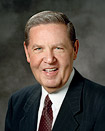
Jeffrey R. Holland
From a talk given at the Provo (Utah) Missionary Training Center on 20 June 2000.
The Atonement of Jesus Christ is rightfully seen as the central fact, the crucial foundation, and the chief doctrine of the plan of salvation, which we are called to teach.
The Prophet Joseph Smith once declared that all things “which pertain to our religion are only appendages” to the Atonement of Jesus Christ. 1 In like manner and for the same reasons, every truth that a missionary or member teaches is only an appendage to the central message of all time—that Jesus is the Christ, the Only Begotten Son of God, the Holy Messiah, the Promised One, the Savior and Redeemer of the world; that He alone burst the bands of death and triumphed over the captivity of hell; that no one of us could ever have those same blessings without His intervention in our behalf; and that there never shall be any “other name given nor any other way nor means whereby salvation can come unto the children of men, [except] in and through the name of Christ, the Lord Omnipotent.” 2
Our basic message is that with a complete offering of His body, His blood, and the anguish of His spirit, Christ atoned for the initial transgression of Adam and Eve in the Garden of Eden, and also for the personal sins of everyone else who would ever live in this world from Adam to the end of time.
Some of those blessings are unconditional, such as the gift of theResurrection. Other of the blessings, at least the full realization of them, are very conditional, requiring the keeping of commandments, the performance of ordinances, and living the life of a disciple of Christ.
Either way, the essential message of the gospel, the starting point for all other truths, is this from the Master’s own lips: “I am the way, the truth, and the life: no man cometh unto the Father, but by me.” 3 Thus the Atonement of Christ, which makes that return to the Father possible, is rightfully seen as the central fact, the crucial foundation, and the chief doctrine of the great and eternal plan of salvation—“our Heavenly Father’s plan,” which we are called to teach.
Little wonder, then, that the Apostle Paul, the greatest missionary the world has ever known (or at least one of them), said: “The preaching of the cross is to them that perish foolishness; but unto us which are saved it is the power of God. … For the Jews require a sign, and the Greeks seek after wisdom: But we preach Christ crucified.” 4

The “Good News”

Inherent in all of this is a rather simple definition of the gospel, at least when considered in its essence. The word gospel as we use it in English comes down to us through early scriptural language which meant literally “good news” or sometimes “glad tidings.” The “good news” was that death and hell could be escaped, that mistakes and sins could be overcome, that there was hope, that there was help, that the insoluble was solved, that the enemy had been conquered. The good news was that everyone’s tomb could one day be empty, that everyone’s soul could again be pure, thatevery child of God could again return to the Father who gave them life.
This is the essence of the message delivered by every prophet who has ever lived and every Apostle ever called to the work. It is the message we are called to declare. It is the message of the angel who came to those unsuspecting Judean shepherds:
“And, lo, the angel of the Lord came upon them, and the glory of the Lord shone round about them: and they were sore afraid.
“And the angel said unto them, Fear not: for, behold, I bring you good tidings of great joy [or, in other words, I bring you the gospel personified], which shall be to all people.
“For unto you is born this day in the city of David a Saviour, which is Christ the Lord.” 5

Prerequisites for Baptism

Probably there are very few missionaries, if any, who do not know the centrality of this doctrine. But I have been surprised to regularly be with the missionaries and discover that this is not something that readily comes forward in a discussion of missionary work.
For example, in zone conferences, which are some of the greatest teaching moments we as General Authorities have with these young elders and sisters, I have asked missionaries what it is they want investigators to do as a result of their discussions with them.
“Be baptized!” is shouted forward in an absolute chorus.
“Yes,” I say, “we do want them to be baptized, but what has to precede that?”
Now they are a little leery. Aha, they think. This is a test. It is a test on the first discussion. “Read the Book of Mormon!” someone shouts. “Pray!” an elder roars from the back of the room. “Attend church!” one of the sisters on the front row declares. “Receive all of the discussions!” someone else offers.
“Well, you have pretty much covered the commitments in the first discussion,” I say, “but what else do you want your investigators to do?”
“Be baptized!” The chorus comes a second time.
“Elders,” I plead, “you have already told me about baptism, and I am still asking!”
Well, now they are stumped. It must be commitments from the other discussions, they think. “Live the Word of Wisdom!” someone says. “Paytithing!” another shouts. And so it goes.
I don’t always run through this little exercise in a zone conference, but sometimes I do. And I have to say that almost never do the missionaries get around to identifying the two most fundamental things we want investigators to do prior to baptism: have faith in the Lord Jesus Christ and repent of their sins. Yet “we believe that the first principles and ordinances of the Gospel are: first, Faith in the Lord Jesus Christ; second, Repentance; [then] third, Baptism by immersion for the remission of sins;fourth, Laying on of hands for the gift of the Holy Ghost.” 6
A convert’s new life is to be built upon faith in the Lord Jesus Christ and His redeeming sacrifice—a conviction that He really is the Son of God, that He lives this very moment, that He really is the door of the sheepfold, that He alone holds the key to our salvation and exaltation. That belief is to be followed by true repentance, repentance which shows our desire to be clean and renewed and whole, repentance that allows us to lay claim to the full blessings of the Atonement.
Then comes baptism for the remission of sins. Yes, baptism is also for membership in the Church, but that isn’t what the Prophet Joseph Smithchose to stress in that article of faith. He stressed that it was baptism for the remission of sins—focusing you and me, the missionary and the investigator again on the Atonement, on salvation, on the gift Christ gives us. This points that new convert toward the blessings of the “good news.”

Making the Atonement Central to Missionary Work

In an effort to keep our work closely linked to the Savior’s ministry, let me suggest some things all of us might do to keep Christ and His Atonement in the forefront of members’ and investigators’ consciousness.
Encourage in every way possible more spiritual Church meetings, especially sacrament meetings. One of the great fears missionaries have at least in some locations is taking their investigators to church. And indeed the investigators deserve to feel essentially the same spirit in sacrament meeting that they feel when being taught by the missionaries.
It will also help orient investigators if missionaries will take some time to explain the ordinance of the sacrament that investigators will be witnessing, what it means for the renewing of baptismal covenants, that the emblems represent the Savior’s body and blood, and so forth. Missionaries could read to these investigators the sacramental prayers as found in the scriptures, they could share some of the words of favorite sacrament hymns, or they could do any number of other things that would help these new visitors and prospective members have a powerful learning experience when they visit a sacrament meeting.
In like manner, do all that you can to make your baptismal services a spiritual, Christ-centered experience. A new convert deserves to have this be a sacred, carefully planned, and spiritually uplifting moment. The prayers, the hymns, surely the talks that are given—all ought to be focused on the significance of this ordinance and the Atonement of Christ, which makes it efficacious.
Probably no other meeting we hold in the Church has the high referral and future baptismal harvest that a baptismal service does. Many of the investigators who attend a baptismal service (that is, the service of someone else being baptized) will go on to their own baptisms. That is more likely to occur if this service is a spiritual, strong teaching moment in which it is clear to participants and visitors alike that this is a sacred act of faith centered on the Lord Jesus Christ, that it is an act of repentance claiming the cleansing power of Christ, that through His majesty and Atonement it brings a remission of sins as well as, with confirmation, membership in His Church. Missionaries, don’t get so consumed with the desire to record a baptism that you yourselves forget what this baptism represents and what it must mean in the life of this new member.
Throughout the teaching experience, missionaries must bear testimony of the Savior and His gift of salvation to us. Obviously you should bear testimony regularly of all the principles you are teaching, but it is especially important that you bear testimony of this central doctrine in the plan of our Heavenly Father.
There are several reasons for bearing testimony. One is that when you declare the truth, it will bring an echo, a memory, even if it is an unconscious memory to the investigator, that they have heard this truth before—and of course they have. A missionary’s testimony invokes a great legacy of testimony dating back to the councils in heaven before this world was. There, in an earlier place, these same people heard this same plan outlined and heard there the role that Jesus Christ would play in their salvation.
“And I heard a loud voice saying in heaven, Now is come salvation, and strength, and the kingdom of our God, and the power of his Christ: for the accuser of our brethren is cast down, which accused them before our God day and night.
“And they overcame him by the blood of the Lamb, and by the word of their testimony; and they loved not their lives unto the death.” 7
So the fact of the matter is investigators are not only hearing our testimony of Christ, but they are hearing echoes of other, earlier testimonies, including their own testimony of Him, for they were on the side of the faithful who kept their first estate and earned the privilege of a second estate. We must always remember that these investigators, every man, woman, and child, were among the valiant who once overcame Satan by the power of their testimony of Christ! So when they hear others bear that witness of Christ’s saving mission, it has a familiar feeling; it brings an echo of truth they themselves already know.
Furthermore, when you bear witness of “Jesus Christ, and him crucified,” 8to use Paul’s phrase, you invoke the power of God the Father and the Holy Ghost. The Savior Himself taught about bearing witness before any other doctrine when He visited the Nephites:
“After this manner shall ye baptize in my name; for behold, verily I say unto you, that the Father, and the Son, and the Holy Ghost are one. …
“And this is my doctrine, and it is the doctrine which the Father hath given unto me. …
“… Whoso believeth in me believeth in the Father also; and unto him [the investigator] will the Father bear record of me, for he will visit him [the investigator] with fire and with the Holy Ghost.
“And thus will the Father bear record of me, and the Holy Ghost will bear record unto him [the investigator] of the Father and me; for the Father, and I, and the Holy Ghost are one. …
“… This is my doctrine, and whoso buildeth upon this buildeth upon my rock, and the gates of hell shall not prevail against them.” 9
So why should we bear frequent and powerful testimony of Christ as Savior, as Redeemer, as Atoning Lamb of God? Because doing so invites and becomes part of the divine power of testimony borne by God the Father and by the Holy Ghost, a testimony borne on wings of fire to the very hearts of investigators. Such a divine testimony of Christ is the rock upon which every new convert must build. Only this testimony of the atoning Anointed, Victorious One will prevail against the gates of hell. So saith the Son of God Himself.
Study the scriptures conscientiously and become familiar with those passages that teach and testify of Christ’s redeeming mission. Nothing will so touch your heart and stir your soul like the truths of which I have been speaking.
I would particularly ask full-time and member missionaries to study from and teach the Atonement of Christ out of the Book of Mormon. I say that in a very biased way, because it was on my own mission that I came to love the Book of Mormon and the majesty of the Son of God which is revealed there. In its unparalleled focus on the messianic message of the Savior of the world, the Book of Mormon is literally a new testament or (to avoid confusion) “another testament” of Jesus Christ. As such the book centers upon that which scriptural testaments have always centered upon since the days of Adam and Eve: the declaration to all that through the Atonement of the Son of God, “as thou hast fallen thou mayest be redeemed, and all mankind, even as many as will.” 10

Testimonies of Book of Mormon Prophets

There is not enough space here to convey the wonder and breadth of these Book of Mormon sermons, but consider this from Nephi early in his ministry:
“And the world, because of their iniquity, shall judge him to be a thing of naught; wherefore they scourge him, and he suffereth it; and they smite him, and he suffereth it. Yea, they spit upon him, and he suffereth it, because of his loving kindness and his long-suffering towards the children of men.
“And the God of our fathers, … yea, the God of Abraham, and of Isaac, and the God of Jacob, yieldeth himself … as a man, into the hands of wicked men, to be lifted up, according to the words of Zenock, and to be crucified, according to the words of Neum, and to be buried in a sepulchre, according to the words of Zenos. …
“And all these things must surely come, saith the prophet Zenos. And the rocks of the earth must rend; and because of the groanings of the earth, many of the kings of the isles of the sea shall be wrought upon by the Spirit of God, to exclaim: The God of nature suffers.” 11
Or this from Nephi at the end of his life:
“And now, my beloved brethren, after ye have gotten into this strait and narrow path, I would ask if all is done? Behold, I say unto you, Nay; for ye have not come thus far save it were by the word of Christ with unshaken faith in him, relying wholly upon the merits of him who is mighty to save.
“Wherefore, ye must press forward with a steadfastness in Christ, having a perfect brightness of hope, and a love of God and of all men. Wherefore, if ye shall press forward, feasting upon the word of Christ, and endure to the end, behold, thus saith the Father: Ye shall have eternal life.
“And now, behold, my beloved brethren, this is the way; … this is the doctrine of Christ, and the only and true doctrine of the Father, and of the Son, and of the Holy Ghost.” 12
Or this from Nephi’s remarkable brother Jacob, who gave a two-daysermon on the Fall and the Atonement!
“I know … that in the body he shall show himself unto those at Jerusalem, … for it behooveth the great Creator that he suffereth himself to become subject unto man in the flesh, and die for all men, that all men might become subject unto him.
“For as death hath passed upon all men, to fulfil the merciful plan of the great Creator, there must needs be a power of resurrection, and the resurrection must needs come unto man by reason of the fall; and the fall came by reason of transgression; and because man became fallen they were cut off from the presence of the Lord.
“Wherefore, it must needs be an infinite atonement. …
“O how great the goodness of our God, who prepareth a way for our escape from the grasp of this awful monster; yea, that monster, death and hell, which I call the death of the body, and also the death of the spirit. …
“And he cometh into the world that he may save all men if they will hearken unto his voice; for behold, he suffereth the pains of all men, yea, the pains of every living creature, both men, women, and children, who belong to the family of Adam.
“And he suffereth this that the resurrection might pass upon all men. …
“And he commandeth all men that they must repent, and be baptized in his name, having perfect faith in the Holy One of Israel, or they cannot be saved in the kingdom of God.” 13
Consider this from King Benjamin:
“For behold, the time cometh, and is not far distant, that with power, the Lord Omnipotent … shall come down from heaven among the children of men, and shall dwell in a tabernacle of clay, and shall go forth amongst men, working mighty miracles, such as healing the sick, raising the dead, causing the lame to walk, the blind to receive their sight, and the deaf to hear, and curing all manner of diseases.
“And he shall cast out devils, or the evil spirits which dwell in the hearts of the children of men.
“And lo, he shall suffer temptations, and pain of body, hunger, thirst, and fatigue, even more than man can suffer, except it be unto death; for behold, blood cometh from every pore, so great shall be his anguish for the wickedness and the abominations of his people. …
“… And even after all this they shall consider him a man, and say that he hath a devil, and shall scourge him, and shall crucify him.
“And he shall rise the third day from the dead. …
“… His blood atoneth for the sins of those who have fallen by the transgression of Adam, who have died not knowing the will of God concerning them, or who have ignorantly sinned.” 14
Or, as a last example, this from the great patriarch Lehi:
“Wherefore, redemption cometh in and through the Holy Messiah. …
“Behold, he offereth himself a sacrifice for sin, to answer the ends of the law, unto all those who have a broken heart and a contrite spirit; and unto none else can the ends of the law be answered.
“Wherefore, how great the importance to make these things known unto the inhabitants of the earth, that they may know that there is no flesh that can dwell in the presence of God, save it be through the merits, and mercy, and grace of the Holy Messiah, who layeth down his life according to the flesh, and taketh it again by the power of the Spirit, that he may bring to pass the resurrection of the dead, being the first that should rise.
“Wherefore, he is the firstfruits unto God, inasmuch as he shall make intercession for all the children of men; and they that believe in him shall be saved.” 15
Obviously, you recognize that these samples are testimonies from just the first pages of the Book of Mormon. Perhaps this is enough to give you a feel for the urgent, impressive theme that runs all through that sacred record. With its declared title-page purpose of testifying that Jesus is the Christ, little wonder that the Book of Mormon was the first—and is still the greatest—missionary tract of this dispensation. As Lehi says to me and to you, “How great the importance to make these things [of the Atonement] known unto the inhabitants of the earth.”
I testify to you that we will change lives, including our own, if we will teach the Atonement through the Book of Mormon as well as, of course, from all of the other scriptures.

The Atonement and the Missionary

Almost everything I have said here has been an aid directed toward the missionary process, ultimately toward the investigator. May I close with an extended testimony about how focusing on the Atonement helps full-time and member missionaries and mission leaders.
Anyone who does any kind of missionary work will have occasion to ask, Why is this so hard? Why doesn’t it go better? Why can’t our success be more rapid? Why aren’t there more people joining the Church? It is the truth. We believe in angels. We trust in miracles. Why don’t people just flock to the font? Why isn’t the only risk in missionary work that of pneumonia from being soaking wet all day and all night in the baptismal font?
You will have occasion to ask those questions. I have thought about this a great deal. I offer this as my personal feeling. I am convinced that missionary work is not easy because salvation is not a cheap experience.Salvation never was easy. We are The Church of Jesus Christ, this is the truth, and He is our Great Eternal Head. How could we believe it would be easy for us when it was never, ever easy for Him? It seems to me that missionaries and mission leaders have to spend at least a few moments in Gethsemane. Missionaries and mission leaders have to take at least a step or two toward the summit of Calvary.
Now, please don’t misunderstand. I’m not talking about anything anywhere near what Christ experienced. That would be presumptuous and sacrilegious. But I believe that missionaries and investigators, to come to the truth, to come to salvation, to know something of this price that has been paid, will have to pay a token of that same price.
For that reason I don’t believe missionary work has ever been easy, nor that conversion is, nor that retention is, nor that continued faithfulness is. I believe it is supposed to require some effort, something from the depths of our soul.
If He could come forward in the night, kneel down, fall on His face, bleed from every pore, and cry, “Abba, Father (Papa), if this cup can pass, let it pass,” 16 then little wonder that salvation is not a whimsical or easy thing for us. If you wonder if there isn’t an easier way, you should remember you are not the first one to ask that. Someone a lot greater and a lot grander asked a long time ago if there wasn’t an easier way.
The Atonement will carry the missionaries perhaps even more importantly than it will carry the investigators. When you struggle, when you are rejected, when you are spit upon and cast out and made a hiss and a byword, you are standing with the best life this world has ever known, the only pure and perfect life ever lived. You have reason to stand tall and be grateful that the Living Son of the Living God knows all about your sorrows and afflictions. The only way to salvation is through Gethsemane and on to Calvary. The only way to eternity is through Him—the Way, the Truth, and the Life.
I testify that the living God is our Eternal Father and that Jesus Christ is His living and Only Begotten Son in the flesh. I testify that this Jesus, who was slain and hanged on a tree, 17 was the chief Apostle then and is the chief Apostle now, the Great High Priest, the chief cornerstone of His Church in this last and greatest of all dispensations. I testify that He lives, that the whole triumph of the gospel is that He lives, and because He does, so will we.
On that first Resurrection Sunday, Mary Magdalene first thought she saw a gardener. Well, she did—the Gardener who cultivated Eden and who endured Gethsemane. The Gardener who gave us the rose of Sharon, the lily of the valley, the cedars of Lebanon, the tree of life.
I declare Him to be the Savior of the world, the Bishop and Shepherd of our souls, the Bright and Morning Star. I know that our garments can be washed white only in the blood of that Lamb, slain from the foundation of the world. I know that we are lifted up unto life because He was lifted up unto death, that He bore our griefs and carried our sorrows, and with His stripes we are healed. I bear witness that He was wounded for our transgressions and bruised for our iniquities, that He was a man of sorrows acquainted with grief because upon Him were laid the transgressions of us all. 18
I bear witness that He came from God as a God to bind up the brokenhearted, to dry the tears from every eye, to proclaim liberty to the captive and open the prison doors to them that are bound. 19 I promise that because of your faithful response to the call to spread the gospel, He will bind up your broken hearts, dry your tears, and set you and your families free. That is my missionary promise to you and your missionary message to the world.
[photos] Photography by Steve Bunderson
[illustration] Right: The Greatest of All, by Del Parson
[photo] Photo by John Luke
[illustration] Detail from King Benjamin Preaches to the Nephites, by Gary L. Kapp

THE ATONEMENT for mom and dad from Rita February 2013


THE ATONEMENT for mom and dad from Rita
February 2013

One of the key aspects of the Atonement is forgiveness. We ALL need it! I need it!

Many people are not happy A LOT…WAY TOO MUCH! At times I take on guilt for the actions of others, my family that didn’t turn out perfect for example. Wow! That’s a lot of burden, but isn’t that what the Atonement is for? I want to challenge each of us to let go of some of that. I want to do for myself what I do for others, accept and love myself a little more, be a little less critical and a little more forgiving of me. Will you join me?

Next of course, I need to talk about forgiveness for sins, shortcomings, etc. Yes, I mean all those things on the list that I didn’t get done every day of my life. Then, there are those pesky faults. I hate to admit that I yell at the people I love. Can you believe it? I’m working on it, though. You know, for sin, I have what I consider the perfect analogy. I’d like you to think of the coin funnels you see in many malls.

You drop a coin (penny, nickel, dime, maybe even a quarter) into a plastic contraption mounted on the side. It shoots on its side onto a huge funnel. I would guess it’s about 5 feet across. As you look down at the funnel, which is about the height of your knees, you watch your coin go around and around. Dropping lower with each round. Until finally, it disappears in the center in a hole only a couple of inches wide. Now, compare that to the progression or course of sin. You begin on the spiral of sin with temptation, just as the coin begins on the funnel. You may then have sinful thoughts; you are dropping lower in the spiral. The thoughts may become more intense and frequent; you’re even lower. You talk about giving in to your desire; lower. Finally, you succumb to the act itself; lower. One act of sin leads to another, and another, taking you lower and lower. The interesting thing about the coin funnel is that at any moment before the coin drops out of sight, you can reach out your hand, stop the coin, and lift it from the funnel. Sometimes, it’s not easy. You may have to drag the coin along the inside of the funnel until it reaches the top where you can pluck it up. If you let go, it slides directly down into the hole at the center. There is no course around and around. In this case, it’s just straight down.

Similarly, we have a Savior who, when called upon, will lift and pluck us from the downward spiral of sin. As with the coin funnel, it may be easy in some cases or difficult in others to be removed from the grasp of sin, and if we slip, the fall is much quicker than the first time. I am grateful for my Savior. I need his help to regain the Father’s presence and blessings. Isn’t that what the Atonement is for? I plan to repent with more care. Will you join me?

Lastly, want to focus on forgiveness from another angle; that is, forgiving others. You may have heard the stories of the shooting of 5 Amish girls by their milkman and the teenager who just for fun threw a 20 pound turkey through the windshield of a car, seriously harming a woman. If not, they are worth looking up and reading for their demonstration of the power of forgiveness.

As I’ve worked through difficult circumstances in my own life, I’ve struggled with forgiving others and myself. I used to think that if I tried hard enough or just did the right thing, I should be able to fix everything. One of the most difficult lessons for me is that not everything is in my control, even though I keep working toward making things the best they can be. Sometimes, the Lord allows us to be tested in the most difficult circumstances. I’ve heard others say, “I don’t know why a loving God would allow that to happen.” The truth is, good people have trials. I’ve seen some of the best people I know have the most severe trials. We are all here to be tested, to learn, and to grow. One of the most difficult trials can be the judgments of others. They may say hurtful things intending to make a point when they have no concept of the situation. I watched a program on abuse where they talked about how our society, also searching for reasons, often puts blame on the victims; those we should be protecting. Anger, guilt, and fear are some of Satan’s most powerful weapons in this war of evil and righteousness that we are fighting each day. He uses these to immobilize us and prevent us from living to our fullest potential. Forgiveness, even when there is no retribution or justice or remorse from your offenders in this life is the solution that will free you from the anger, guilt, and fear.

The Lord sent me an experience allowing me to demonstrate deep forgiveness early in my adult life. My 3rd child was hit and killed by an elderly driver when 19-months-old. In shock herself, she brought my son’s body to the house, spoke with me briefly, and then left the scene. She had been on her way to visit her daughter in Preston, Idaho, and continued there. Although entitled to receive more, we insisted that her insurance company only pay for the funeral and burial costs. When the insurance company then tried to sue this elderly woman,  not only forgave her, but defended her. Although I supported the taking of her driving privileges, I insisted that the insurance company not attempt to hold her financially responsible in any way.

As we grow older, we learn how true it is that each of us is imperfect. We learn to be more tolerant and loving toward each other in spite of our faults. In many cases, to those who others would say do not deserve it. Some would say this is foolish, but I testify to you that they are wrong. I say this service will bring you happiness and peace. Although I often still struggle, consider the following. If I treat others as if they are doing their best and love them, isn’t the rest what the Atonement is for? I commit to be less judgmental and provide more Christ-like service. Will you join me?

So, to me the Atonement is being forgiven, forgiving others, and forgiving myself. It really is love personified as my Savior himself.

Well, who can really leave the subject of the Atonement at one page? I will leave this page here, but my heart flows on and on. I cannot stop on this topic without sharing some of my favorite words. It is true that these words have been said first by others, but they have been solidified into my heart and become my own. I love them. If you choose to read further, you will understand why I say this.

In the name of my loving Savior, Jesus Christ, Amen.

THE ATONEMENT – More of the Story…

Ah, so you could not stop either. I’m glad you chose to join me in reading from the words of the Prophets and Apostles, but first a quick, personal story.

Years ago, interestingly enough, my daughter’s family took a driving trip across the country stopping at many Church historical sites, including the Carthage Jail. The tour guide at this site told a story of how for years the blood stain of Joseph was preserved on the floor where he was shot. In the early 1980s, President Kimball visited the site and gave instructions to clean up the blood stain. He said that leaving it there kept open the conflict and hurt from years in the past. The tour guide described how perceptions of our Church in that area immediately began to change upon this simple gesture of forgiveness. Her stories of this trip are what instigated my interest in a mission to Nauvoo.

Please forgive me for mixing words, but I find them so beautiful and wanted to combine some of them.

Once or twice in a thousand years—perhaps a dozen times since mortal man became of dust a living soul—an event of such transcendent import occurs that neither heaven nor earth is ever thereafter the same.

Once or twice in a score of generations the hand from heaven clasps the hand on earth in perfect fellowship, the divine drama unfolds, and the whole course of mortal events changes.

Now and then in a quiet garden, or amid the fires and thunders of Sinai, or inside a sepulchre that cannot be sealed, or in an upper room—almost always apart from the gaze of men and seldom experienced by more than a handful of people—the Lord intervenes in the affairs of men and manifests His will relative to their salvation.

The most transcendent of all such events occurred in a garden called Gethsemane, outside Jerusalem’s walls, when the Chief Citizen of planet Earth sweat great drops of blood from every pore as He in agony took upon Himself the sins of all men on conditions of repentance. Yet another of these events, destined to affect the life and being of every living soul, happened in the Arimathean’s tomb when the sinless spirit of the one perfect man returned from the paradise of God to inhabit again—this time in glorious immortality—the pierced and slain body that once was His.

I feel, and the Spirit seems to accord, that the most important doctrine I can declare, and the most powerful testimony I can bear, is of the atoning sacrifice of the Lord Jesus Christ, the Living Christ.

The great Atonement was the supreme act of forgiveness. The magnitude of that Atonement is beyond our ability to completely understand. I know only that it happened, and that it was for me and for you. The suffering was so great, the agony so intense, that none of us can comprehend it when the Savior offered Himself as a ransom for the sins of all mankind.

It is through Him that we gain forgiveness. It is through Him that there comes the certain promise that all mankind will be granted the blessings of salvation, with resurrection from the dead. It is through Him and his great overarching sacrifice that we are offered the opportunity through obedience of exaltation and eternal life. May God help us to be a little kinder, showing forth greater forbearance, to be more forgiving, more willing to walk the second mile, to reach down and lift up those who may have sinned but have brought forth the fruits of repentance, to lay aside old grudges and nurture them no more.

His atonement is the most transcendent event that ever has or ever will occur from Creation’s dawn through all the ages of a never-ending eternity.

It is the supreme act of goodness and grace that only a god could perform. Through it, all of the terms and conditions of the Father’s eternal plan of salvation became operative.

Through it are brought to pass the immortality and eternal life of man. Through it, all men are saved from death, hell, the devil, and endless torment.

And through it, all who believe and obey the glorious gospel of God, all who are true and faithful and overcome the world, all who suffer for Christ and his word, all who are chastened and scourged in the Cause of him whose we are—all shall become as their Maker and sit with him on his throne and reign with him forever in everlasting glory.

I believe in this Christ. I believe that he came to this Earth as an innocent baby. I believe that my Eternal Heavenly Father allowed him to leave this Earth as an innocent sacrifice, to ransom me from my frailties and stubborn errors. I believe that he lives, perfected and glorified. I believe that in a coming day, I shall feel the nail marks in his hands and in his feet and shall wet his feet with my tears. I shall not know any better then than I know now that he is God’s Almighty Son, that he is our Savior and Redeemer, and that salvation comes in and through His atoning blood and in no other way. I believe He will be my advocate and plead with the Father on my behalf. I love Him.

In the name of our dear Lord, Jesus the Christ, Amen.


SCRIPTURES:
When Christ was on the Earth, he taught the principle of forgiveness to those in Jerusalem and those in the Americas. In Matthew 6:14-15 and 3 Nephi 13:14-15, he said,
“For, if ye forgive men their trespasses, your Heavenly Father will also forgive you; But if ye forgive not men their trespasses neither will your Father forgive your trespasses.”

In our day, the Lord has said in revelation:
“Wherefore, I say unto you, that ye ought to forgive one another; for he that forgiveth not his brother his trespasses standeth condemned before the Lord; for there remaineth in him the greater sin. I, the Lord, will forgive whom I will forgive, but of you it is required to forgive all men.

The Lord has offered a marvelous promise. Said He, “He who repented of his sins, the same is forgiven, and I, the Lord, remember them no more.”

In the Sermon on the Mount, Jesus taught:
“Ye have heard that it hath been said, An eye for an eye, and a tooth for a tooth:
But I say unto you, That ye resist not evil: but whosoever shall smite thee on thy right check, turn to him the other also.
And if any man will sue thee at the law, and take away thy coat, let him have thy cloke also.
And whosoever shall compel thee to go a mile, go with him twain.
Give to him that asketh thee, and from him that would borrow of thee turn not thou away.
Ye have heard that it hath been said, Thou shalt love thy neighbor, and hate thine enemy.
But I say unto you, Love your enemies, bless them that curse you, do good to them that hate you, and pray for them which despitefully use you, and persecute you.”

Christ taught us to serve even those who some would say do not deserve it because of their actions. I want to share with you what King Benjamin said in the Book of Mormon because he said it so eloquently.

16 And also, ye yourselves will succor those that stand in need of your succor; ye will administer of your substance unto him that standeth in need; and ye will not suffer that the beggar putteth up his petition to you in vain, and turn him out to perish.
 17 Perhaps thou shalt say: The man has brought upon himself his misery; therefore I will stay my hand, and will not give unto him of my food, nor impart unto him of my substance that he may not suffer, for his punishments are just—
 18 But I say unto you, O man, whosoever doeth this the same hath great cause to repent; and except he repenteth of that which he hath done he perisheth forever, and hath no interest in the kingdom of God.
 19 For behold, are we not all beggars? Do we not all depend upon the same Being, even God, for all the substance which we have, for both food and raiment, and for gold, and for silver, and for all the riches which we have of every kind?
 20 And behold, even at this time, ye have been calling on his name, and begging for a remission of your sins. And has he suffered that ye have begged in vain? Nay; he has poured out his Spirit upon you, and has caused that your hearts should be filled with joy, and has caused that your mouths should be stopped that ye could not find utterance, so exceedingly great was your joy.
 21 And now, if God, who has created you, on whom you are dependent for your lives and for all that ye have and are, doth grant unto you whatsoever ye ask that is right, in faith, believing that ye shall receive, O then, how ye ought to impart of the substance that ye have one to another.
 22 And if ye judge the man who putteth up his petition to you for your substance that he perish not, and condemn him, how much more just will be your condemnation for withholding your substance, which doth not belong to you but to God, to whom also your life belongeth; and yet ye put up no petition, nor repent of the thing which thou hast done.
 23 I say unto you, wo be unto that man, for his substance shall perish with him; and now, I say these things unto those who are rich as pertaining to the things of this world.
 24 And again, I say unto the poor, ye who have not and yet have sufficient, that ye remain from day to day; I mean all you who deny the beggar, because ye have not; I would that ye say in your hearts that: I give not because I have not, but if I had I would give.
 25 And now, if ye say this in your hearts ye remain guiltless, otherwise ye are condemned; and your condemnation is just for ye covet that which ye have not received.
 26 And now, for the sake of these things which I have spoken unto you—that is, for the sake of retaining a remission of your sins from day to day, that ye may walk guiltless before God—I would that ye should impart of your substance to the poor, every man according to that which he hath, such as feeding the hungry, clothing the naked, visiting the sick and administering to their relief, both spiritually and temporally, according to their wants.
 27 And see that all these things are done in wisdom and order; for it is not requisite that a man should run faster than he has strength. And again, it is expedient that he should be diligent, that thereby he might win the prize; therefore, all things must be done in order.


TURKEY STORY:
Sometimes, when we have offended others, it is their unexpected forgiveness that stops our downward descent, and begins our journey back to safety. President Hinckley spoke of such a woman. The story comes from a column in the Deseret Morning News, written by Jay Evensen. The column is titled, “Forgiveness Has Power to Change Future.”

“How would you feel toward a teenager who decided to toss a 20-pound frozen turkey from a speeding car headlong into the windshield of the car you were driving? How would you feel after enduring six hours of surgery using metal plates and other hardware to piece your face together, and after learning you still face years of therapy before returning to normal—and that you ought to feel lucky you didn’t die or suffer permanent brain damage?

“And how would you feel after learning that your assailant and his buddies had the turkey in the first place because they had stolen a credit card and gone on a senseless shopping spree, just for kicks? …

“This is the kind of hideous crime that propels politicians to office on promises of getting tough on crime. It’s the kind of thing that prompts legislators to climb all over each other in a struggle to be the first to introduce a bill that would add enhanced penalties for the use of frozen fowl in the commission of a crime.

“The New York Times quoted the district attorney as saying this is the sort of crime for which victims feel no punishment is harsh enough. ‘Death doesn’t even satisfy them,’ he said.

“Which is what makes what really happened so unusual. The victim, Victoria Ruvolo, a 44-year-old former manager of a collections agency, was more interested in salvaging the life of her 19-year-old assailant, Ryan Cushing, than in exacting any sort of revenge. She pestered prosecutors for information about him, his life, how he was raised, etc. Then she insisted on offering him a plea deal. Cushing could serve six months in the county jail and be on probation for 5 years if he pleaded guilty to second-degree assault.

“Had he been convicted of first-degree assault—the charge most fitting for the crime—he could have served 25 years in prison, finally thrown back into society as a middle-aged man with no skills or prospects.

“But this is only half the story. The rest of it, what happened the day this all played out in court, is the truly remarkable part.

“According to an account in the New York Post, Cushing carefully and tentatively made his way to where Ruvolo sat in the courtroom and tearfully whispered an apology. ‘I’m so sorry for what I did to you.’

“Ruvolo then stood, and the victim and her assailant embraced, weeping. She stroked his head and patted his back as he sobbed, and witnesses, including a Times reporter, heard her say, ‘It’s OK. I just want you to make your life the best it can be.’ According to accounts, hardened prosecutors, and even reporters, were choking back tears”

What a great story that is, greater because it actually happened, and that it happened in tough old New York. Who can feel anything but admiration for this woman who forgave the young man who might have taken her life?

President Hinckley went on to acknowledge that not all stories end as well as this one. But he made the point that in many cases, “forgiveness, with love and tolerance, accomplishes miracles that can happen in no other way.”


AMISH STORY:
James E Faust, previous Second Counselor in the First Presidency, told a story in the April 2007 Conference that perfectly demonstrates this principle.

“In the beautiful hills of Pennsylvania, a devout group of Christian people live a simple life without automobiles, electricity, or modern machinery. They work hard and live quiet, peaceful lives separate from the world. Most of their food comes from their own farms. The women sew and knit and weave their clothing, which is modest and plain. They are known as the Amish people.

A 32-year-old milk truck driver lived with his family in their Nickel Mines community. He was not Amish, but his pickup route took him to many Amish dairy farms, where he became known as the quiet milkman. Last October he suddenly lost all reason and control. In his tormented mind he blamed God for the death of his first child and some unsubstantiated memories. He stormed into the Amish school without any provocation, released the boys and adults, and tied up the 10 girls. He shot the girls, killing five and wounding five. Then he took his own life.

This shocking violence caused great anguish among the Amish but no anger. There was hurt but no hate. Their forgiveness was immediate. Collectively they began to reach out to the milkman’s suffering family. As the milkman’s family gathered in his home the day after the shootings, an Amish neighbor came over, wrapped his arms around the father of the dead gunman, and said, “We will forgive you.” Amish leaders visited the milkman’s wife and children to extend their sympathy, their forgiveness, their help, and their love. About half of the mourners at the milkman’s funeral were Amish. In turn, the Amish invited the milkman’s family to attend the funeral services of the girls who had been killed. A remarkable peace settled on the Amish as their faith sustained them during this crisis.

One local resident very eloquently summed up the aftermath of this tragedy when he said, “We were all speaking the same language, and not just English, but a language of caring, a language of community, [and] a language of service. And, yes, a language of forgiveness.” It was an amazing outpouring of their complete faith in the Lord’s teachings in the Sermon on the Mount: “Do good to them that hate you, and pray for them which despitefully use you.”

The family of the milkman who killed the five girls released the following statement to the public:

“To our Amish friends, neighbors, and local community:

“Our family wants each of you to know that we are overwhelmed by the forgiveness, grace, and mercy that you’ve extended to us. Your love for our family has helped to provide the healing we so desperately need. The prayers, flowers, cards, and gifts you’ve given have touched our hearts in a way no words can describe. Your compassion has reached beyond our family, beyond our community, and is changing our world, and for this we sincerely thank you.

“Please know that our hearts have been broken by all that has happened. We are filled with sorrow for all of our Amish neighbors whom we have loved and continue to love. We know that there are many hard days ahead for all the families who lost loved ones, and so we will continue to put our hope and trust in the God of all comfort, as we all seek to rebuild our lives.”

How could the whole Amish group manifest such an expression of forgiveness? It was because of their faith in God and trust in His word, which is part of their inner beings. They see themselves as disciples of Christ and want to follow His example.

Hearing of this tragedy, many people sent money to the Amish to pay for the health care of the five surviving girls and for the burial expenses of the five who were killed. As a further demonstration of their discipleship, the Amish decided to share some of the money with the widow of the milkman and her three children because they too were victims of this terrible tragedy.

Forgiveness is not always instantaneous as it was with the Amish. When innocent children have been molested or killed, most of us do not think first about forgiveness. Our natural response is anger. We may even feel justified in wanting to “get even” with anyone who inflicts injury on us or our family.

Dr. Sidney Simon, a recognized authority on values realization, has provided an excellent definition of forgiveness as it applies to human relationships:

“Forgiveness is freeing up and putting to better use the energy once consumed by holding grudges, harboring resentments, and nursing unhealed wounds. It is rediscovering the strengths we always had and relocating our limitless capacity to understand and accept other people and ourselves.”

Most of us need time to work through pain and loss. We can find all manner of reasons for postponing forgiveness. One of these reasons is waiting for the wrongdoers to repent before we forgive them. Yet such a delay causes us to forfeit the peace and happiness that could be ours. The folly of rehashing long-past hurts does not bring happiness.

Some hold grudges for a lifetime, unaware that courageously forgiving those who have wronged us is wholesome and therapeutic.

Forgiveness comes more readily when, like the Amish, we have faith in God and trust in His word. Such faith “enables people to withstand the worst of humanity. It also enables people to look beyond themselves. More importantly, it enables them to forgive.”


Brian Taylor's letter, March 3, 2013


I hope you're smiling
Inbox
x

Brian L Taylor
6:19 PM (12 hours ago)
to me
Dear Elder and Sister Scott,
        Another wonderful Sunday--a day of replenishing the spiritual larders
and of growing in understanding of the Gospel.  I was just thinking
that if we learn or understand just one Gospel principle each time we
attend a block of meetings, how truly intelligent we will be after a
few decades.  Today in our gospel doctrine class Brother Jay made a
statement that stretched my understanding just a little more.  Perhaps
I had bordered on the principle in my own thinking previously, but it
was plainly stated today.  How many times members of the Church have
read of someone's having been visited by a heavenly messenger and then
pray for the Lord to allow him to see an angelic being.  The Lord
NEVER sends such an angelic personage to a human being unless has a
specific mission to perform--such as the Angel Moroni to Joseph Smith,
the appearance of Elijah in the Kirtland Temple, and John the Baptist
restoring the Aaronic Priesthood.  The Lord will never send an angelic
being just to satisfy the curiosity of one of us human beings--a small
point, perhaps, but an important principle.
        I am still in awe about the announcement of 18-year old men and
19-year old women being eligible for mission service.  I was invited
to Dave's house Thursday night to be with a rather large group to
witness Danny open his long envelope from Salt Lake City.  When he
read a call to serve in Guatemala, there were many smiles and words of
congratulations and expressions of joy over this opportunity for a
young man who is excited to have this special experience.  Then today
when Bishop Dale Chugg mentioned that Danny had been able to answer
many of the difficult questions that were given the priests in the
Bishop's office.  I know Danny is excited--just like a lot of other
missionaries.  And his cousin Mitch will probably be reading his call
to serve this coming Wednesday or Thursday.  I am grateful to have
lived long enough to witness these special events.
        I think what a marvelous influence all of you are going to be when
you get home from your missions and continue here in the service of
the Lord.  I saw one such young man when I walked into priesthood
meeting today, and later saw another when I waited at the bishop's
office after church for Nick and his wife to be set apart.  They still
carry that glow because they are happy in the Lord's service.
        I am so happy here in my home, where I constantly feel the strong
missionary dedication of two returned missionaries--my grandson and
his wife.  They are excited to be set apart to teach the temple
preparation lessons to those who are ready and anxious to prepare for
temple blessings.  In about three weeks our ward will have another day
at the temple, where I will again get a glimpse of what true happiness
is.  Perhaps my dear companion will be there to observe my bringing
happiness to one more relative.  Oh, it is wonderful to belong to a
church that knows what true happiness can be.
        Keep smiling.  You have every reason in the world to look that way.
Love, "Grandpa" Taylor